The alcove you already have
Most Waterbury bathrooms from the 1920s through the 1970s have a tub set into a three-wall alcove about five feet wide. Turning that into a shower usually means the drain only moves a short distance and the valve stays on the same wall, which keeps the plumbing cost reasonable.
The tub comes out first. In older homes that sometimes means breaking up a cast-iron tub in place, because it won't fit through the door it came in by. In newer homes it's usually a fiberglass or acrylic unit that comes out in pieces in an afternoon. With the alcove open to the studs we check the subfloor and joists under the old drain, where slow leaks tend to do their damage.
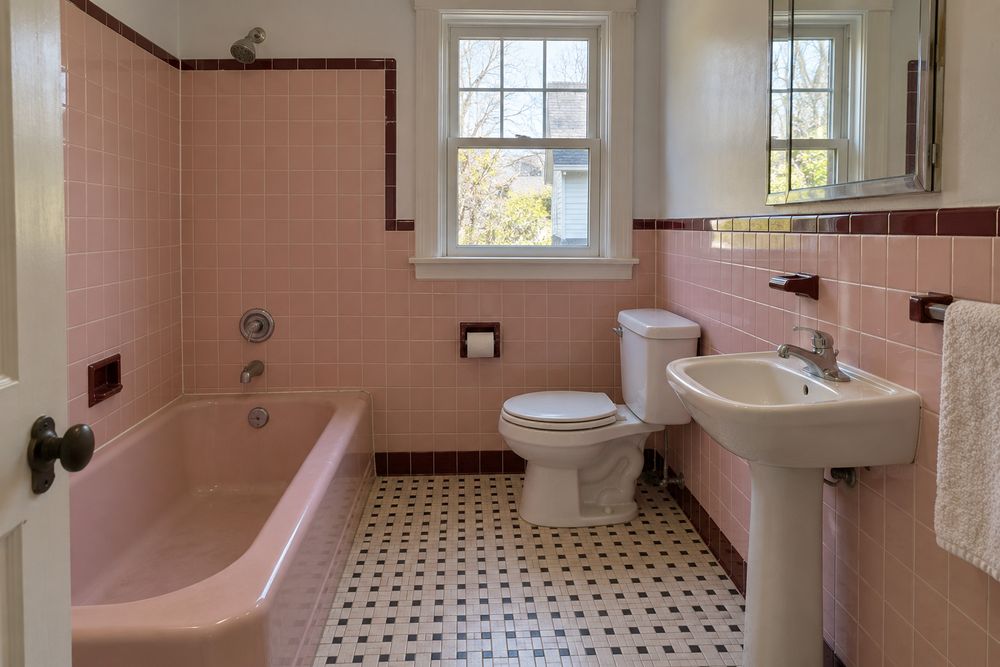 A common starting point: 1950s pink tile and a built-in tub
How the new shower is built
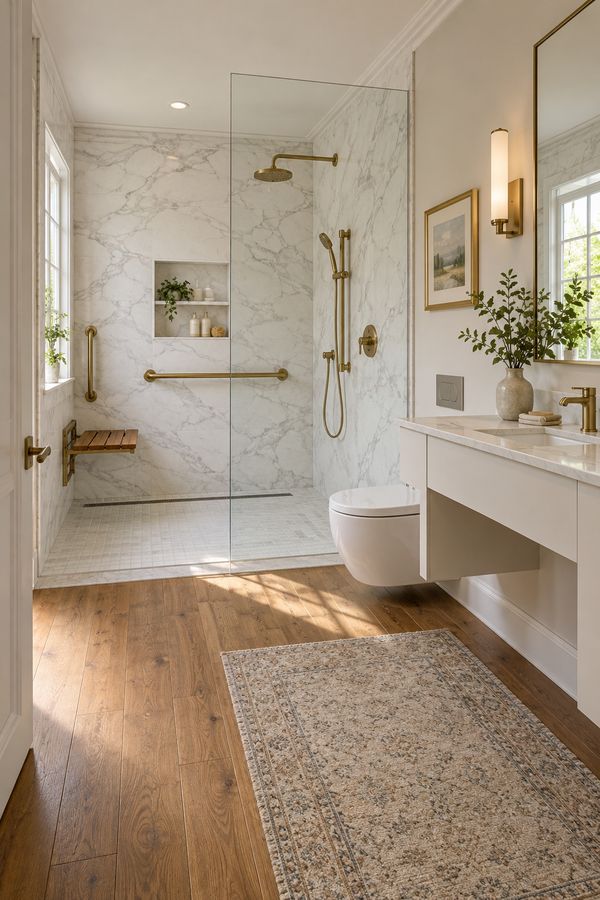
- Framing for a niche between studs and blocking for a bench, grab bars and the glass door hinges.
- A sloped mortar bed or foam tray to the drain, then a continuous waterproof membrane across the floor and up every wall.
- A pressure-balancing or thermostatic valve at a height that suits the people using it, with a handheld on a slide bar if you'd like one.
- Tile, grout and sealer, then glass measured to the finished tile.
Should one tub stay?
If this is the only tub in the house and there are small children around, or you might sell within a few years, it can make sense to keep a tub somewhere. In a two-family or triple-decker where each floor has one bathroom, we'll talk that through per unit.
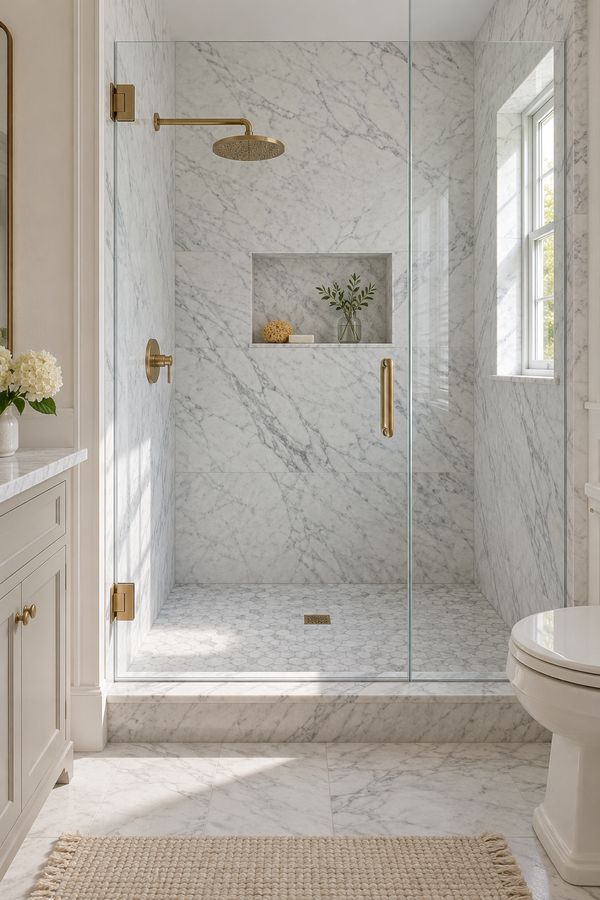
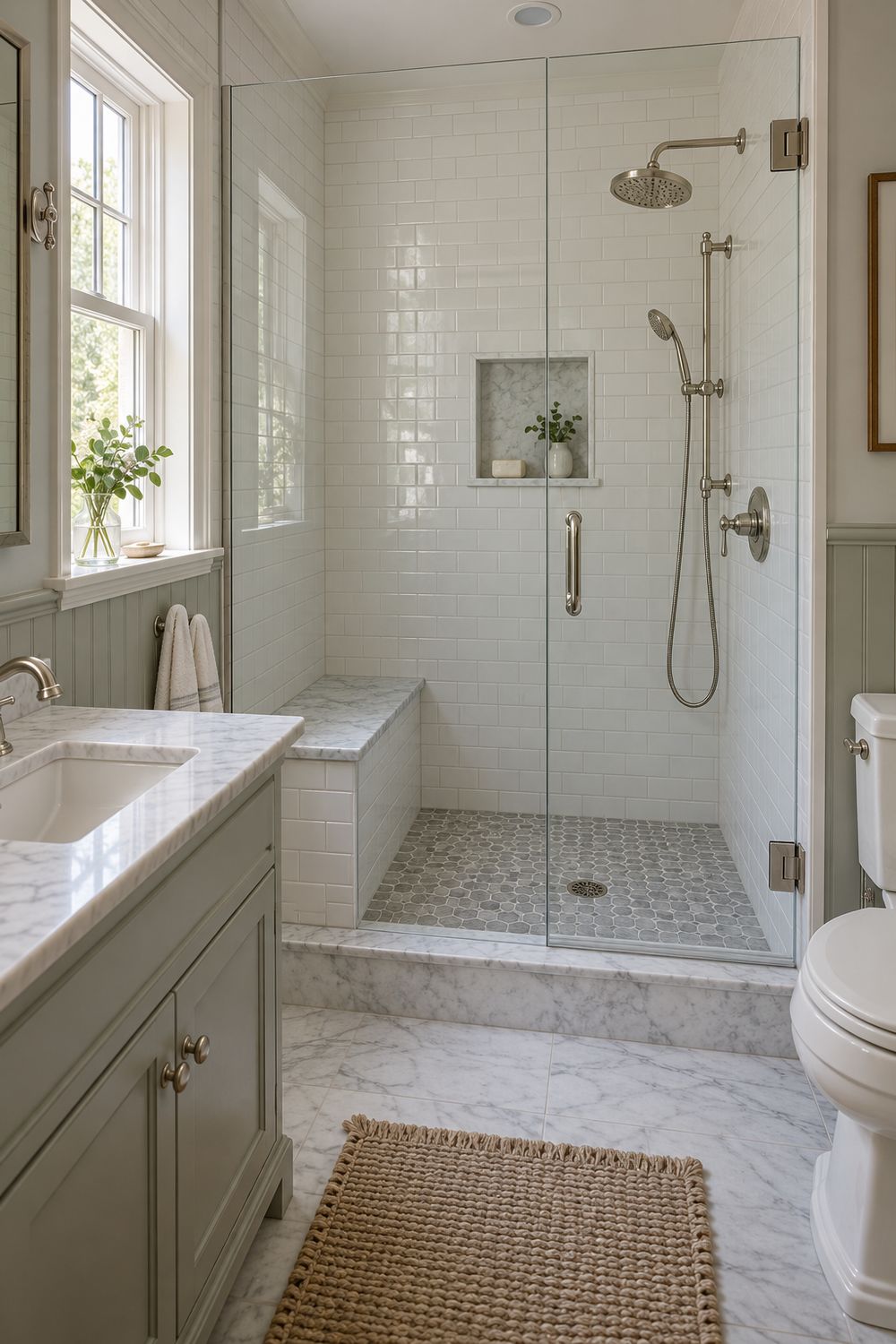 Beveled subway tile, a marble bench and a niche in the old tub alcove
Published prices
Tub-to-shower conversion
$1,200to$8,000
Typical range, average about $3,000
Angi · checked Oct 2026 · national
Custom tiled walk-in shower
$15,000
Upper end with premium materials
Angi · checked Oct 2026 · national
Angi's conversion guide puts most tub-to-shower conversions at $1,200 to $8,000, with an average around $3,000. It notes that a custom-tiled walk-in shower can reach $15,000. The low end of that range covers acrylic or fiberglass inserts. A fully tiled shower with glass, a bench and a new valve sits much higher, and prewar houses can add plaster work and sometimes subfloor repair.