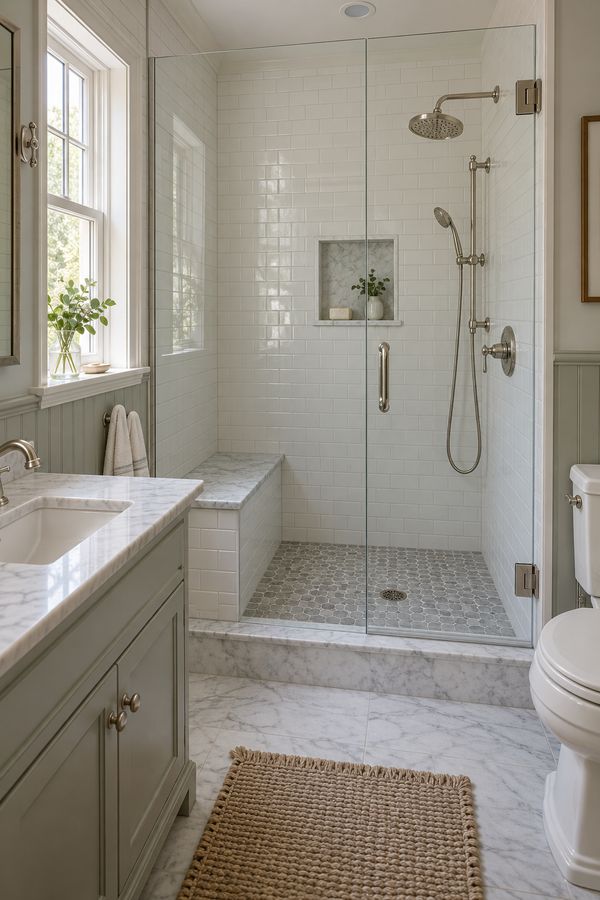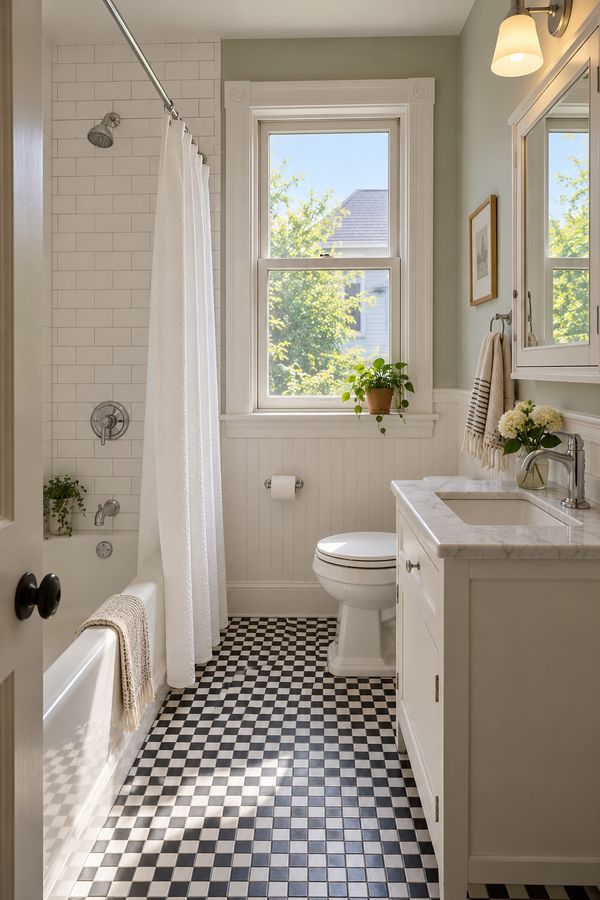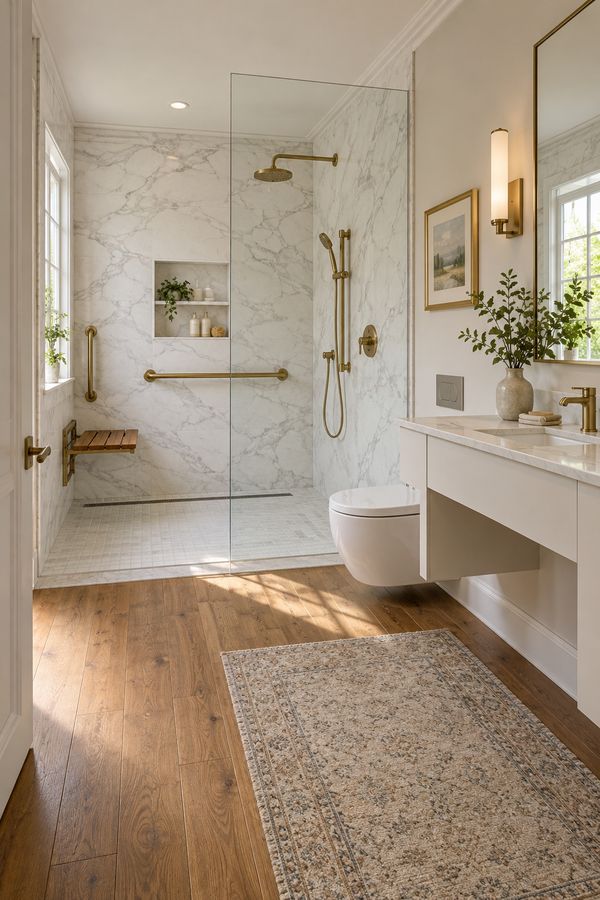
The design visit
We start at your house with a tape measure. We note where the window, the door swing, the drain and the radiator sit, look at the floor from the basement if we can, and ask how the room gets used: who showers in the morning, who takes baths, where the towels end up. Then we sketch two or three layouts. One usually keeps the toilet, tub and sink where they are, because that's the cheapest version. Another moves things to fix whatever bothers you most about the room.
You don't need a finished idea for that visit. A few photos saved on your phone help more than a list, because they show us the feel you're after. That works the same for a 1910 two-family as for a 1990s Colonial.
Choosing tile, fixtures and light
Samples come to your bathroom. Tile looks different under a north-facing window than under store lighting, so we hold the floor and wall tile against each other in the room where they'll go. Most people settle things in roughly this order:
- the floor tile, since it covers the most area and takes the most wear,
- the shower walls, and whether the niche and bench get an accent,
- the vanity: width, one sink or two, drawers or doors,
- the metal finish for the faucet, valve and shower head,
- lights and mirrors, so your face is lit evenly from the sides.
If a choice stalls, we set the sample beside the others it has to live with, and the answer is usually obvious.
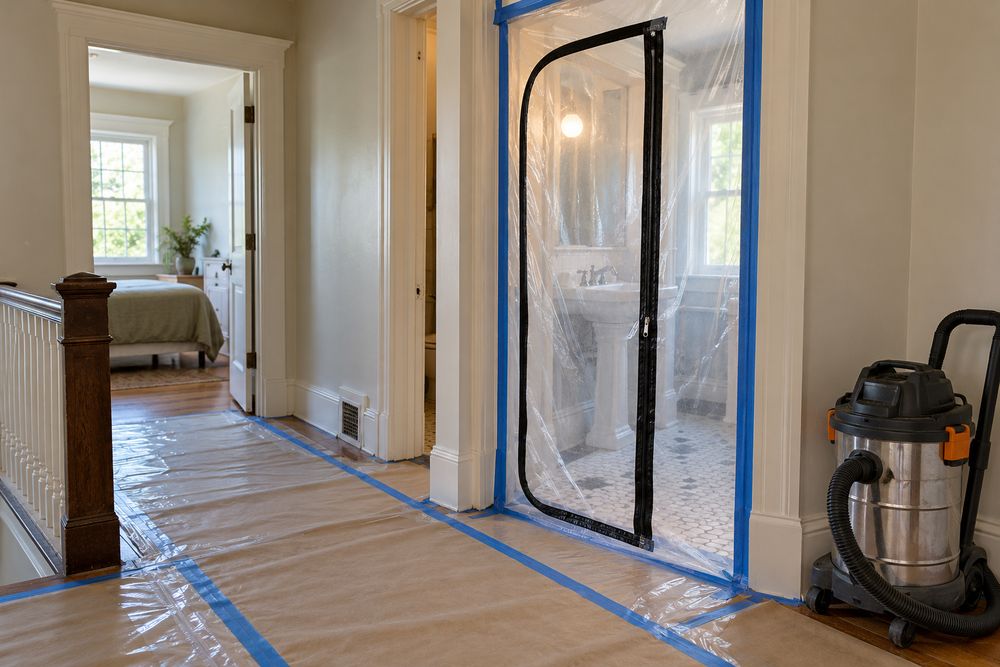 Plastic walls and covered floors go up before demolition
The order of the work
Once the plan and price are set, the work runs in a fixed order: dust walls and floor protection, tear-out to the studs, any framing or subfloor repair, rough plumbing and wiring, the waterproof membrane, tile, then vanity, glass and fixtures. Custom glass is measured after the tile is set, so it often arrives a week or two after the walls are finished. A typical hall bath takes three to five weeks from demolition.
The price lists each part of the job on its own line: demolition, framing, plumbing, electrical, waterproofing, tile, glass, vanity and fixtures. If the floor opens up and we find rot under an old tub, the allowance for that is written in before we start, so the number doesn't jump later.
Living through it
If it's the only bathroom in the house, tell us at the first visit. We can plan the work so the toilet is back in place for as many nights as possible, and we'll tell you which days the water will be off. Debris leaves the house the same day, and the hallway stays covered until the job is done. One person from the crew is your contact the whole way through.
What we'll ask on the first call
- Which floor is the bathroom on, and roughly how big is it?
- Tub, shower or both?
- About when was the house built, and has the bathroom been redone before?
- Is there a date you're working toward, like a holiday or a new baby?