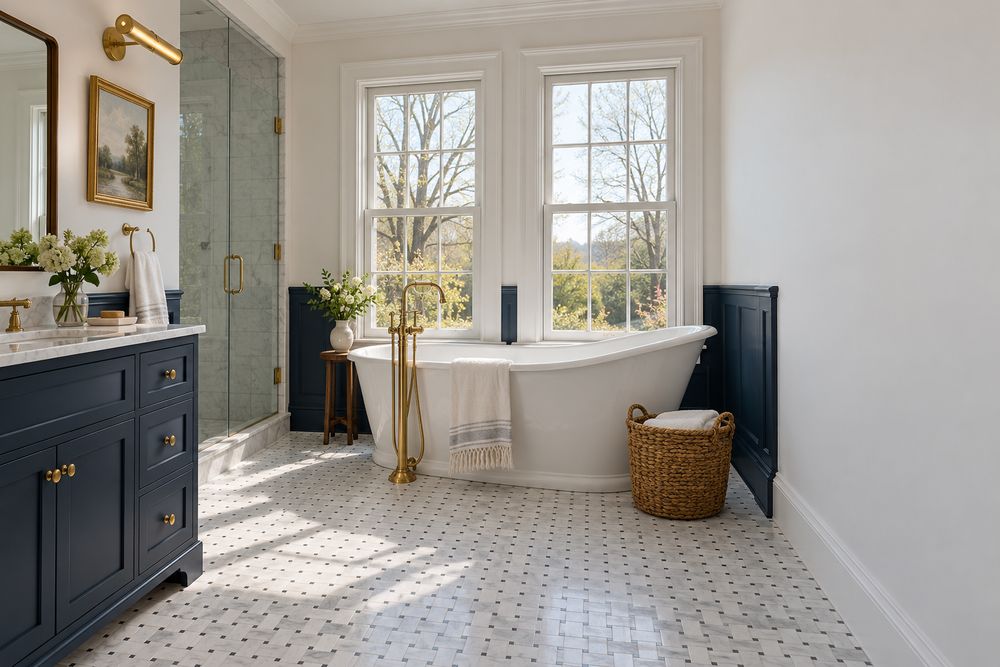
Restore the look, replace the guts
A restoration keeps what made the room charming and replaces everything that fails with age. The tile pattern, the tub style, the door and window casings and the proportions of the room stay true to the period. Behind the walls, supply lines, drains, wiring, insulation and the waterproofing under the tile are all new.
According to the Census Bureau's American Community Survey (2020–2024), about 15,400 of Waterbury's roughly 50,000 homes were built before 1940. Many of those bathrooms have been redone at least once since, and that later layer is usually what comes out.
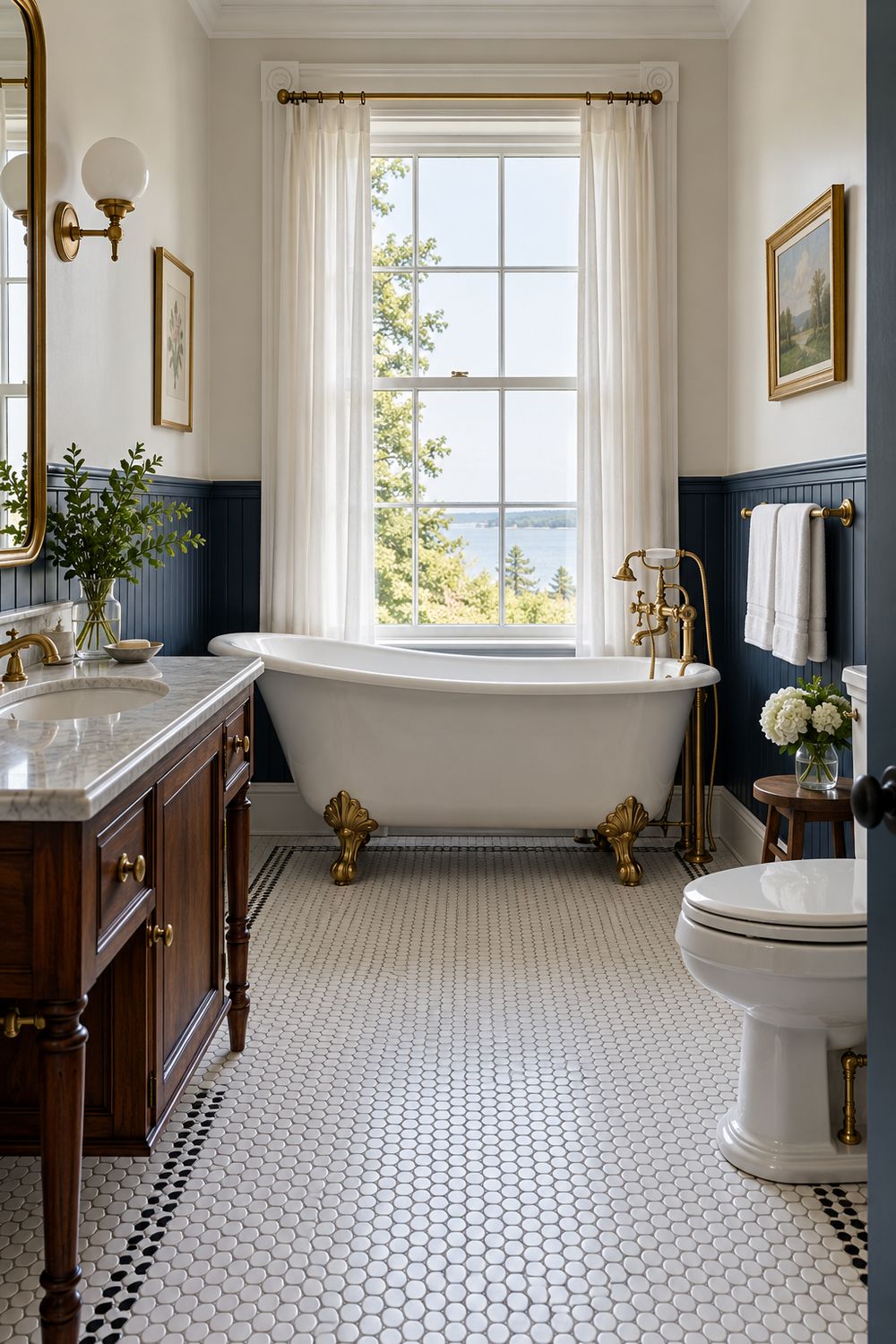 A clawfoot tub on a penny-round floor with a black border
Keep the tub, or find one
A cast-iron clawfoot or built-in tub is heavy and often in better shape than it looks. If the enamel is worn but the body is sound, it can be reglazed in place or taken out to be refinished and brought back. If the house lost its original tub years ago, a new cast-iron or acrylic clawfoot with exposed brass or nickel supply lines gives the same look.
Moving a cast-iron tub up a narrow stair takes a few people and a plan. We check the route before it's ordered.
Period details worth the time
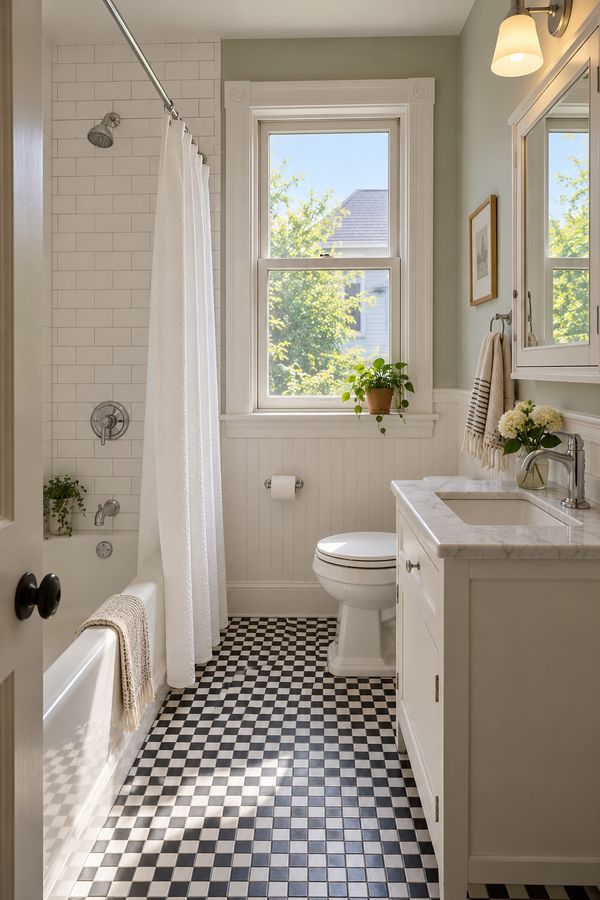
Floors are usually unglazed white hex or penny round, with a border row in black, green or blue a few inches in from the wall. Walls get subway tile or beadboard up to chair-rail height, with plaster or painted drywall above it. A pedestal or console sink with a single bridge or widespread faucet fits the period better than a cabinet vanity, although a furniture-style vanity works if you need the storage.
The small things carry a lot of weight. We match door and window casings to the rest of the house, or take the old ones off carefully and put them back. Sconces at face height on each side of the mirror light a face far better than one bar overhead, and they look right in an old room.
Layers of painted trim, plaster walls and floors that have settled out of level all take careful prep before the new room can go in. In a restoration that touches nearly every surface, so we build those days into the schedule from the start rather than finding them halfway through.
The period look in a newer house
You don't need a 1910 house for this room. A clawfoot tub on a hex floor, beadboard to chair-rail height and a pedestal sink sit just as well in a 1990s Colonial or a new build, and they often go in faster there, because the walls are drywall and the floor is already level. We keep the proportions honest, with a tub sized for the room and trim that suits the doors.
What these jobs cost
Midrange bath remodel
$27,559
New England average, 2025 Cost vs. Value
Zillow summary of JLC data · checked Oct 2026 · regional
Upscale bath remodel
$83,877
New England average, 2025 Cost vs. Value
Cost vs. Value 2025 · checked Oct 2026 · regional
A faithful restoration with mosaic floors, real marble and a refinished cast-iron tub usually lands between the two Cost vs. Value benchmarks for New England. Those figures come from the 2025 report summary on Zillow and regional tables published from the same data. Your written price comes after we've measured the room and looked under the floor.